
Quick Summary
A very real tenancy management case. From the first message to a fresh coat of paint (Without client lifting a finger). There’s a few messages a landlord dreads more than this case. Especially when you are thousands of kilometres away. When you don’t know who to call, what it will cost, or how bad it’s actually going to get. And your tenant is waiting.
This is exactly what one of my clients faced and here’s how it played out from the start to finish.
It Started Small
The first message from the tenant was easy to dismiss. Bubbles and yellow staining had appeared on the kitchen ceiling. Nothing dramatic, just s sign that something wasn’t right above.
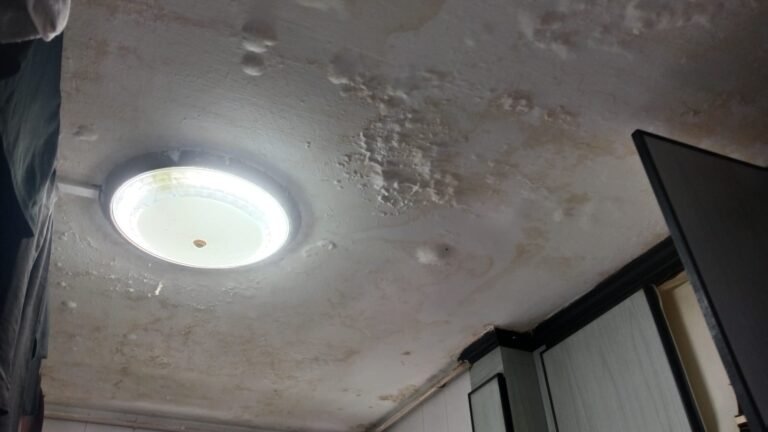
A few days later, it got worse. Water has now actively dripped through. What started out as a disformed wall had become a live leak and the moisture had already started flowing into kitchen cabinets.
A few days later, the damage had spread, moisture had flowed through the cabinet’s interior and beginning to drip through.
The Complication
Here’s the thing about ceiling leaks in HDB flats. The source is almost never where it looks like it is. If you patch the ceiling below without tracing where the water is actually coming from, you’re just painting over the problem that will come back, usually worse.
My client at that time was overseas. Chasing this down herself would have meant coordinating across time zones, knocking on a neighbor’s door that she has never met before, and navigating HDB’s processes without knowing who to speak to or what she was entitled to ask for. Most landlords in this situation would simply patch what they can see and hope for the best. That approach almost always fails.
How We Handled It
I don’t manage situations like this over WhatsApp and do guesswork. I went down to the unit in person and simultaneously arranged for HDB’s town council to send us an officer to inspect alongside me.
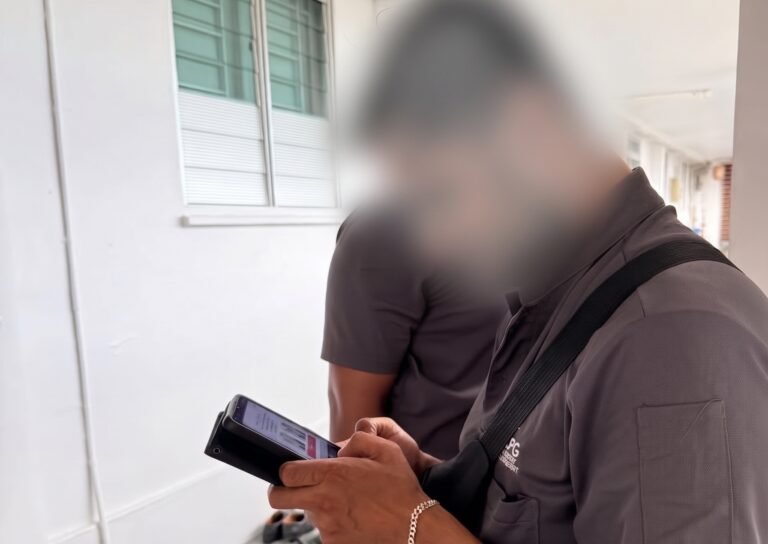
Once we were inside, we traced the water path methodically. The real source wasn’t in my client’s unit at all, it was the neighbour’s floor trap directly upstairs. Their waterproofing had failed and the water had been slowly seeping through the slab into my client’s kitchen ceiling.
A failed waterproofing seal at the neighour’s floor trap upstairs.
I went up to the neighbour’s unit with the HDB officer to document and confirm the issue on the spot. HDB’s branch office subsequently ordered the neighbour to rectify the fault and isolate the floor trap. Once the work was completed, the leaking stopped for good.
The part most people wouldn't have pushed for
Repair works took about two weeks to be completed. But the fixed leak doesn’t fix the ruined ceiling.
Flaking paint, water stains, and damaged plaster don’t just disappear once the moisture stops. Most people would just accept this as a sunk cost and arrange repainting out of their own pocket. However, I did not.
I worked with the HDB officer to have the damaged paint scraped off and a fresh coat of ceiling paint applied to my client’s unit. (All under the rectification order, at no cost to her.)
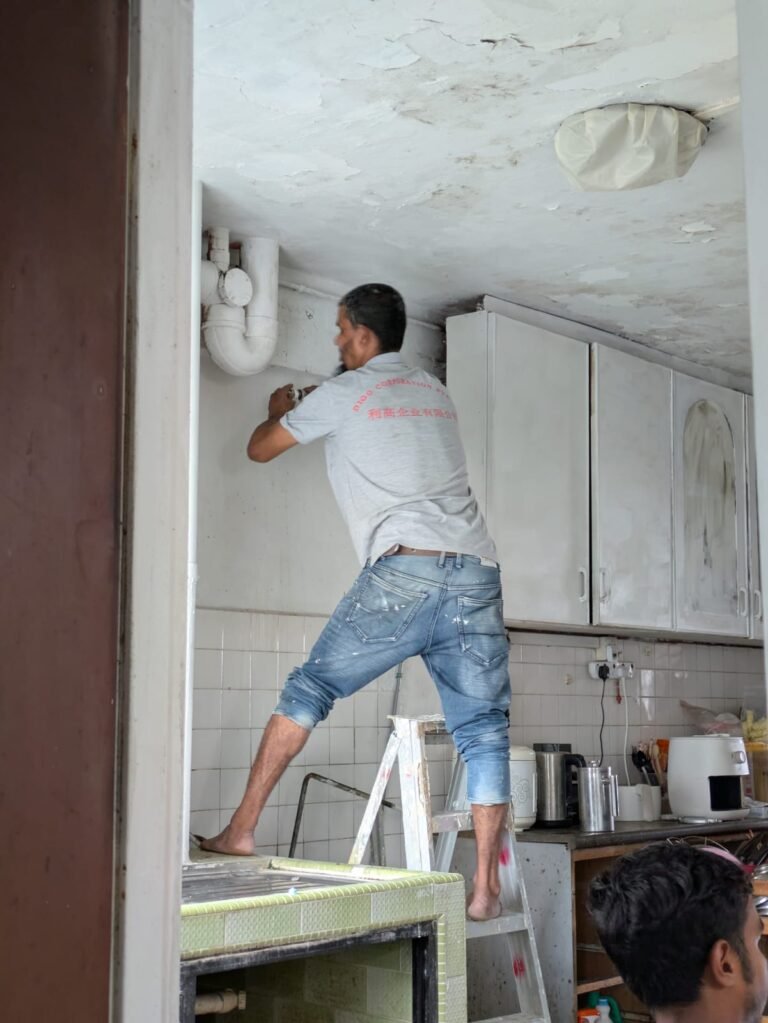
The kitchen ceiling after rectification and repainting. Clean, fresh and at no cost to my client.
The Outcome
From the tenant’s first message to a freshly repainted ceiling. (About six weeks)
My client did not need to speak to the tenant about the issue. Did not call HDB. Did not knock on the neighbour’s door. Did not chase a single contractor. She only heard each key points. (What I found. What I am doing. What has been resolved.) The only time she was needed was where her input was actually needed. Everything else, I handled.
That zero-touch experience isn’t just convenience. When you’re overseas, the alternative is an anxious mind that follows you everywhere you go. For a landlord managing from a distance, knowing someone is physically on the ground and knows how to push for the right outcome. Its not just a quick fix, its everything.
What this case taught me and what this means for you
1. The visible damage is rarely the actual problem.
Ceiling stains are symptoms. The real source could be one, two, or even three floors up. If you patch without tracing, you’ll be back at the same problem within months.
2. HDB’s processes have leverage (only if you know how to use them.)
In cases where the fault originates from a neighbour’s unit, HDB can compel rectification. That includes remediation of damage to your unit as a result. Most landlords don’t know to push for this. Knowing the process is how my client got her ceiling repainted without spending a cent.
3. Having someone local isn’t about convenience, it’s about outcomes.
A landlord trying to manage this remotely would have spent weeks on WhatsApp, paid for contractors out of pocket, and probably still ended up with an unresolved source. Being physically present, and knowing who to call and what to ask for, changed the entire result.
just an honest chat about what proper support looks like for your property.
Reach out and let's have a conversation.
If you own a rental property in Singapore and the thought of a message like this fills you with dread. Whether you're based overseas, travelling frequently, or simply don't want to be your own property manager.
You should only hear from me when a decision actually needs your input. Everything else, I handle.